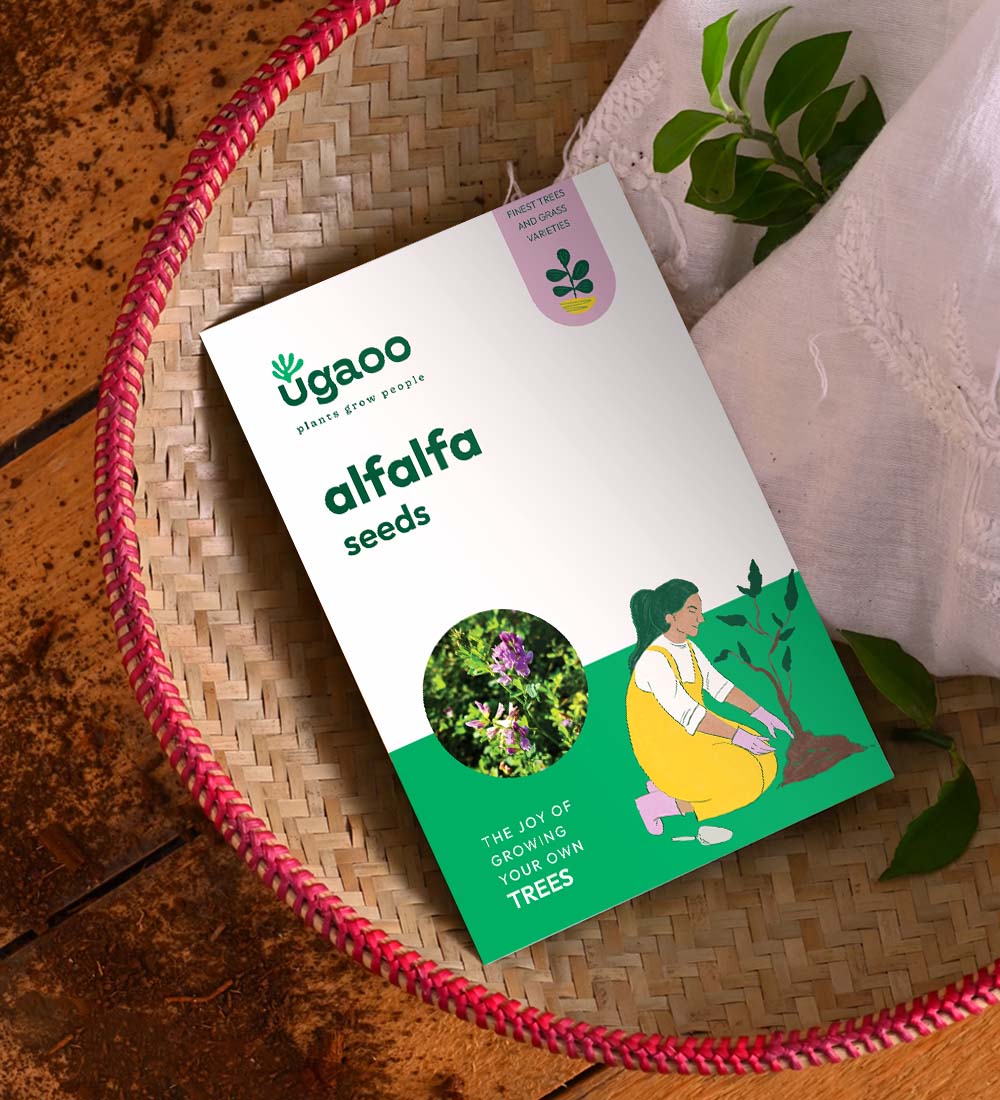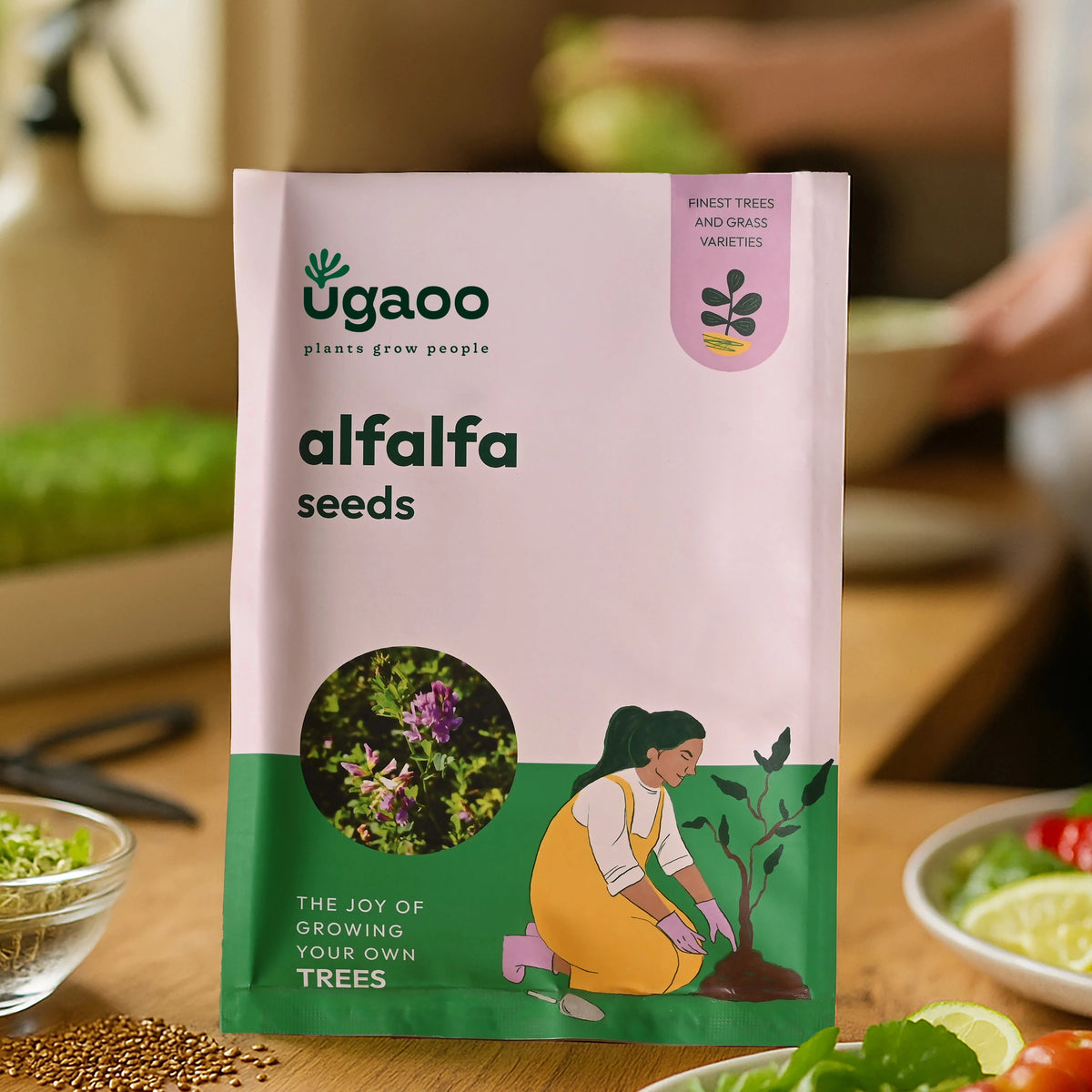
Alfalfa Seeds (Lucerne Grass)

Alfalfa Seeds (Lucerne Grass)

80% Germination 80% Germination
3-4 Day Sprout 3-4 Day Sprout
30-45 Days to Maturity 30-45 Days to Maturity
Select Packet Size

Offers for you:

Get 10% off on above ₹1,499

Save10 Copied!

Free shipping on all orders above ₹499

Offer applied at checkout
Regular price
₹825
Regular price
₹825
Sale price
₹825
Inclusive of all taxes.
Tax included.

    Delivery estimate
    Product Details

    Alfalfa (Lucerne) is one of the most nutritious plants you can grow at home. Whether sprouted in a jar on your kitchen counter or grown in a pot, it delivers exceptional nutrition quickly and easily.

    • Exceptionally rich in protein, vitamin K, vitamin C, copper, manganese, and folate.
    • Grow as sprouts in 5-7 days on your kitchen counter with no soil needed.
    • Or grow as a full plant for fresh greens, fodder, and soil enrichment.
    • Nitrogen-fixing roots naturally improve soil health with every crop.
    Sowing
    • For sprouts: soak 2 tablespoons of seeds in water overnight, drain, and rinse twice daily in a clean jar. Sprouts are ready in 5-7 days.
    • For garden plants: sow seeds 0.5-1 cm deep directly in the pot. We recommend Ugaoo's Organic Veggie Mix.
    • Best time to sow: October to February for garden planting.
    • Keep soil moist after sowing.
    Germination
    • Seeds sprout in 3-5 days for sprouts; 5-10 days for soil-sown plants.
    • Keep soil moist during the germination period.
    • Once sprouts appear, move to a bright spot with morning sun.
    Transplanting

    NA - Alfalfa grows best with direct sowing.

    Growing
    • Needs 5-6 hours of sunlight for garden plants.
    • Water when the topsoil feels dry. Keep soil consistently moist.
    • Space plants 10-15 cm apart.
    • Feed with cow manure every 20 days for garden plants. Alfalfa also naturally fixes nitrogen in the soil.
    • For sprouts, just rinse twice daily in a clean jar and keep in indirect light.
    Aftercare & Post-Harvest
    • Alfalfa regrows well after cutting and can be harvested multiple times.
    • For soil-grown plants, once productivity declines, pull out and sow fresh.
    • Sprout batches can be sown weekly for a continuous supply.
    Harvesting
    • For sprouts: harvest in 5-7 days once 3-5 cm long and pale green to green.
    • For garden plants: harvest tender leaves and stems from 30-45 days.
    • Cut back to about 5-8 cm from the base and the plant will regrow.
    Alfalfa Seeds (Lucerne Grass)
    Alfalfa Seeds (Lucerne Grass)
    Non-GMO Certified Non-GMO Certified
    Made in India Made in India
    1 Crore+ Customers 1 Crore+ Customers
    Non-GMO Certified Non-GMO Certified
    Made in India Made in India
    1 Crore+ Customers 1 Crore+ Customers

    Frequently bought together

    Alfalfa Seeds (Lucerne Grass)

    Alfalfa Seeds (Lucerne Grass)

    ₹825

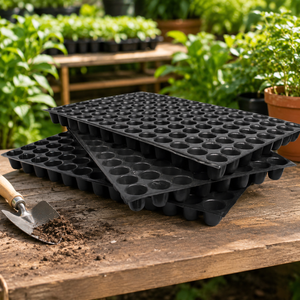
    Reusable 104 Holes Seedling Tray (Set of 3)

    Reusable 104 Holes Seedling Tray (Set of 3)

    ₹295
    HDPE Round Grow Bag- 12 in x 12 in (DIA x H) (Set of 6) – 250 GSM

    HDPE Round Grow Bag- 12 in x 12 in (DIA x H) (Set of 6) – 250 GSM

    ₹449

    Total Amount

    ₹1,255 ₹1,569 20% SAVE

    Ugaoo vs the Rest

    Local Nurseries
    Ugaoo
    Others
    Plant quality
    Poor health (No quality checks)
    Green, healthy & bushy (3-step quality check)
    Inconsistent
    Pests
    Common Issue
    Pest-controlled
    Possible risk
    Repotting
    Requires repotting (Pot is missing)
    Not required (Comes in a Ugaoo Gropot)
    Varies; not consistent
    Soil
    Standard soil
    Pre-mixed 90-Day fertilised
    Standard soil
    Growing Conditions
    Out sourced
    Grown by experts on Ugaoo farms
    Outsourced
    After-sale help
    None
    Expert support
    None
    Guaranteed
    No Guarantee
    Assured quality,
    30 days replacement
    Conditional
    One-stop garden shop
    Grow it. From a seedGrow it. From a seed

    Grow it. From a seed

    A tiny seed, your own hands, a little patience and it becomes something you can eat, smell, or simply admire. It's a small ritual in your own space that grows into something much bigger.

    Your harvest, your hands
    Your harvest, your hands
    veggies, fruits, or blooms, all grown by you
    No chemicals, just care
    No chemicals, just care
    clean growing, right from the start
    Daily dose of calm
    Daily dose of calm
    a few minutes of mindful habit, every day
    Skill that's yours for life
    Skill that's yours for life
    once you know how, it never leaves you

    You may also like

    15% OFF
    Bestseller

    NUVSO331
    ₹149 ₹175
    32% OFF

    NUVSO321, NUVSO323, NUVSO324
    37% OFF

    NUFSO065
    ₹99 ₹155
    32% OFF

    NUVSO336,NUVSO337,NUVSO338,NUVSO339
    37% OFF

    NUFSO025
    ₹99 ₹155
    37% OFF

    NUFSO033,NUFSO034
    32% OFF

    NUVSO146,NUVSO148,NUVSO149
    K
    Keerthika

    Loved the service.. good quality

    Ugaoo Ugaoo

    Frequently asked questions

    What is Alfalfa called in India?

    Alfalfa is also known as Lucerne in India, and has several regional names like Rijika, Kudhirai Masal, Guniea grass, Lasunghas, Vilayati Methi, and Lusarne Soppu. Alfalfa is a perennial plant mainly grown to feed animals. It's a high-protein feed that helps animals stay healthy and produce more milk.

    How to grow lucerne from seed?

    Of course! Spring, late summer, and autumn are the best to sow Alfalfa seeds. Just sprinkle the seeds evenly at a depth of 0.25 - 0.5 inches in clay soil and cover it with more soil. It's imperative that the soil is moist at all times as the seeds soak up water almost 125% of their weight before they swell and rupture the seed coat. Sprouts will appear within 7 - 10 days.

    What is Alfalfa seed good for?

    The superfood and powerhouse of nutrients, Alfalfa seeds are rich in vitamins A, C, E, and K known to control blood sugar and lower cholesterol levels. Apart from being beneficial for digestive health and providing fiber, these seeds are great for immune function due to their high antioxidant content. In addition, the minerals like iron, copper, and magnesium present in the seeds boost overall health and well-being.

    Is Fenugreek and Alfalfa same?

    No, Fenugreek and Alfalfa are different plants. Though both are nutritious legumes, Fenugreek is an annual one while Alfalfa is a perennial. Another remarkable difference is that Fenugreek has bloat-free effects in ruminants while Alfalfa seeds can induce lethal bloats in ruminants. Fenugreek seeds are consumed as a spice to improve the flavor and nutritive value of the food, on the other hand, sprouted Alfalfa is widely consumed in salads.